Reviewing Retro Please Keep Your Stupid to Yoursel
As a designer who has spent countless hours digitizing and stitching out thousands of patterns, I have developed a keen eye for what works in the hoop and what fails on the fabric. When I first encountered Retro Please Keep Your Stupid to Yoursel, my initial reaction was not just about the bold, sarcastic message, but about its potential as a versatile asset in the crowded world of handmade goods. This is not merely a digital file; it is a statement piece that requires careful consideration before it hits the needle. For embroidery designers, Etsy sellers, and craft business owners, understanding how this graphic translates from a screen to a tangible product is crucial for maintaining professional standards and customer satisfaction.
The Visual Personality and First Impressions
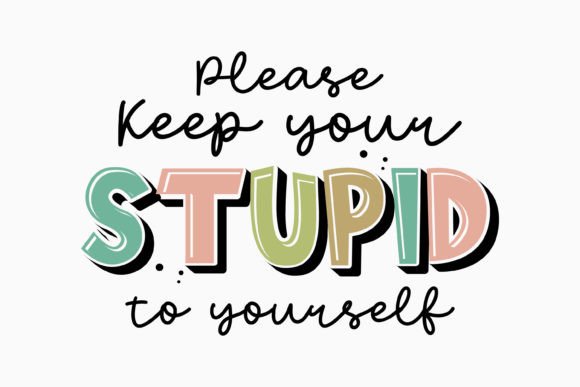
The design falls squarely into the category of retro-inspired typography, a trend that continues to dominate the Crafts and Graphics markets. The mood it creates is unapologetically confident and slightly rebellious. Visually, the layout relies on strong, clean lines that suggest a vintage aesthetic without being overly ornate. For an embroidery project, this simplicity is often a blessing. Complex gradients and tiny details can get lost in thread, but the structural integrity of this quote suggests it will hold up well under stitching. The visual personality is distinct enough to stand out on a plain garment but neutral enough to fit various brand aesthetics, from edgy streetwear to cozy home decor.
When evaluating a machine embroidery design like this, I always look at the negative space. In this case, the spacing between letters appears balanced, which is vital for preventing thread breaks and ensuring clarity. A cluttered design can look messy after washing, but the open nature of this retro font style allows the fabric texture to breathe, enhancing the handmade product appeal rather than weighing it down with excessive stitch density.
Real-World Application: The Tote Bag Test
To truly understand the value of this asset, let us walk through a real-life scenario. Imagine you are preparing a custom order for a local boutique looking for unique tote bag designs. You choose a heavy-duty canvas material, which is ideal for embroidery because it provides a stable base. Using Retro Please Keep Your Stupid to Yoursel, you aim for a central placement that acts as the focal point of the bag.
In this context, the design performs exceptionally well. The bold lettering translates into a crisp satin stitch or a dense fill stitch, depending on your digitizing preferences or the source file specifications. Customers reacting to this item are likely to appreciate the humor combined with the quality of the stitch work. It transforms a simple accessory into a conversation starter. For an Etsy seller, this type of personalized gift or statement piece drives engagement because it reflects the buyer’s personality. The design does not just sit on the fabric; it interacts with it, creating a finished product that feels intentional and high-value.
Versatility Across Product Lines
Beyond tote bags, this graphic is highly adaptable for various commercial embroidery projects. Consider sweatshirt embroidery, where the texture of fleece or cotton blend requires a design that does not pucker the fabric. The retro style of this quote pairs beautifully with the casual comfort of a hoodie. Similarly, for baby embroidery, one might hesitate due to the language, but for older children’s apparel or teen fashion, it fits perfectly. It also works well for embroidered patches, where the backing stabilizer can support denser stitching if needed.
For those selling digital embroidery files, offering this as part of a bundle can increase the perceived value of your shop. It serves as a strong design asset for printable mockups, allowing potential buyers to visualize the end result before purchasing. Whether used for holiday embroidery gifts that lean into humor or everyday custom apparel, the versatility is a key selling point.
Technical Considerations and Stitching Challenges
While the design is promising, practical application requires attention to detail. One must consider where this design should be used carefully. Small hoop sizes may require scaling down, which risks making the text illegible. If the lettering becomes too small, the satin stitch may become too narrow to cover the fabric properly, leading to gaps or fraying. Therefore, confirming the minimum viable size is essential before starting a production run.
Textured fabrics present another challenge. On a rough linen or a thick towel, the fine edges of the retro font might get lost. In such cases, using a contrasting thread color can help define the shape. Additionally, when working with stretchy fabric like jersey knits for t-shirts, proper stabilization is non-negotiable. Without a cut-away stabilizer, the weight of the thread could distort the garment over time, ruining the professional look of the handmade product.
Dense stitch areas are another factor. If the original SVG or EPS file is converted to an embroidery file without optimizing stitch density, the result can be stiff and uncomfortable. Designers should check whether the design works for both personal and commercial projects by testing it on scrap fabric first. This step allows you to adjust tension and thread colors to ensure the final output matches your brand consistency.
Enhancing Visual Appeal and Brand Trust
The way Retro Please Keep Your Stupid to Yoursel is executed directly impacts customer trust. A sloppy stitch-out suggests carelessness, while a clean, well-digitized result signals professionalism. For small shop products, this distinction is vital. Buyers engage more with items that look polished and durable. By choosing high-quality thread colors that complement the retro vibe—such as mustard yellows, burnt oranges, or faded teals—you enhance the visual appeal and make the item more giftable.
Furthermore, recognizing the importance of licensing cannot be overstated. Before selling finished items or digital products derived from this graphic, confirm the license terms. The product description mentions included EPS and SVG files, which are typically vector graphics used for printing or cutting, but for machine embroidery, you need a specific embroidery file format compatible with your machine. Ensure you have the right assets for the intended use, whether it is a digital embroidery file for resale or a physical stitched item.
Practical Designer Notes for Success
To maximize the potential of this design, follow these practical steps:
- Test on Scrap Fabric: Always stitch a sample on the same material you plan to use for the final product to check for puckering or thread breaks.
- Check Thread Color Contrast: Ensure the thread stands out against the fabric background, especially on dark or patterned materials.
- Review Stitch Density: If digitizing yourself, avoid overly dense fills that can cause stiffness; if using a pre-made file, verify its quality.
- Confirm Hoop Size: Make sure the design fits comfortably within your hoop without hitting the edges.
- Inspect Small Details: Zoom in on the vector file to ensure no anchor points are misplaced before conversion.
- Mockup Testing: Create black and white mockups to see how the design reads without color distraction.
- Stabilizer Selection: Use appropriate stabilizers for the fabric type to maintain shape and durability.
In conclusion, Retro Please Keep Your Stupid to Yoursel is a compelling choice for designers looking to add personality to their portfolio. Its strength lies in its clear, retro aesthetic and its adaptability across various mediums, from apparel to home decor. However, its success depends entirely on the skill of the executor. By paying attention to technical details like stitch density, fabric choice, and stabilization, you can transform this graphic into a high-quality embroidered patch, tote bag design, or sweatshirt feature that resonates with customers. For the modern craft entrepreneur, it represents an opportunity to blend humor with craftsmanship, creating items that are not only worn or used but cherished for their unique character.