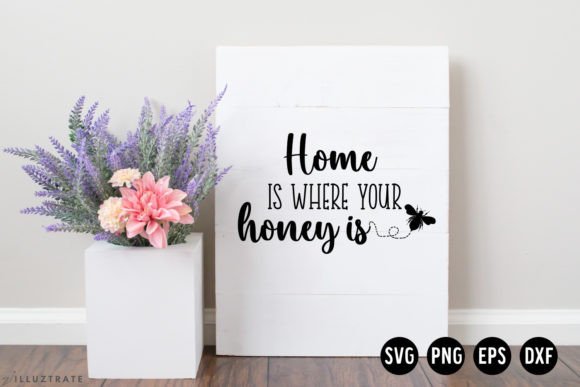
Reviewing the Home is Where Your Honey is SVG Cut File
As a designer who spends half my life digitizing and the other half stitching, I have learned that not every cute phrase translates well into thread. We often see digital assets marketed broadly across Crafts and Graphics, but the jump from a vector screen display to a textured, three-dimensional embroidered surface is where many projects fail. Today, I am evaluating the Home is Where Your Honey is SVG Cut File not just as a digital download, but as a potential centerpiece for real-world handmade products.
First Impressions and Visual Personality
When I first opened the file, the immediate takeaway was its warmth. The phrase plays on a classic sentiment, adding a layer of affectionate humor that resonates deeply with couples and families. Visually, the layout appears balanced, with a mix of script and sans-serif elements that suggest a modern yet cozy aesthetic. For an embroidery designer, this combination is both a blessing and a challenge. Script fonts require careful attention to connecting strokes to prevent thread breaks, while block letters need sufficient density to look solid without becoming stiff.
The mood this design creates is inviting. It does not scream for attention with aggressive graphics; instead, it whispers comfort. This makes it an ideal candidate for items associated with domestic bliss and personal connection. However, because it relies heavily on typography, the clarity of each letterform is paramount. In a digital preview, tiny serifs or thin connectors might look crisp, but under the needle, they can easily disappear into the fabric grain if not managed correctly.
Real-World Application: The Custom Tote Scenario
To truly test the viability of this design, I imagined a specific client request: a custom embroidered tote bag for a wedding gift. The bride wanted something practical yet sentimental for her honeymoon luggage tag or beach bag. Using the Home is Where Your Honey is SVG Cut File here makes sense because the message is timeless.
In this scenario, the design would likely be stitched onto a heavy canvas or cotton duck fabric. These materials have a distinct weave that can swallow fine details. If I were preparing this as a machine embroidery design, I would need to consider how the SVG paths translate into stitch types. Would the thinner parts of the font use a satin stitch or a running stitch? A satin stitch offers a premium, raised look but requires precise column width management. If the letters are too narrow, the stitches will overlap excessively, causing puckering. If they are too wide, the underlying fabric might show through.
For a tote bag design, durability is key. The finished product needs to withstand washing and handling. This means checking the stitch density carefully. Over-digitizing can make the fabric stiff and prone to tearing at the edges of the hoop. Under-digitizing leaves gaps that look unprofessional. The balance here is critical for maintaining the integrity of the handmade product.
Versatility Across Product Lines
Beyond tote bags, this design has strong potential in several other categories. For sweatshirt embroidery, the soft texture of fleece or French terry provides a forgiving background. However, stretchy fabrics require robust stabilization. I would recommend using a cut-away stabilizer to prevent the design from distorting when the garment is worn or washed.
It also works beautifully for baby embroidery projects, such as onesies or nursery wall hangings. The sentiment is sweet enough for a newborn gift, provided the scale is adjusted appropriately. Small hoop sizes, like 4x4 inches, might constrain the full phrase, forcing the designer to split the text or reduce the font size significantly. This is where caution is needed. Tiny lettering on baby clothes must still be legible and safe, avoiding loose threads that could pose a hazard.
For Etsy sellers and small shop owners, this asset can be adapted for embroidered patches. Patches are trending, and a witty quote like this sells well. However, creating a patch requires dense stitching and often a merrowed edge. The internal details of the SVG must be simplified to ensure they do not get lost in the high-density fill required for a durable patch.
Technical Considerations and Pitfalls
While the concept is strong, there are areas where this design requires careful handling. Since the source file is an SVG intended for cutting machines like Silhouette Cameo or Cricut Maker, it is not inherently an embroidery file. This is a crucial distinction for crafters. An SVG defines shapes with vectors, but embroidery requires stitch paths, angles, and densities.
If you are converting this SVG into an embroidery file yourself, you must manually assign stitch types. Do not assume auto-digitizing software will get it right. Pay special attention to:
- Thread color contrast: Ensure the thread stands out against the fabric. A low-contrast combination, like cream thread on white linen, will render the text invisible from a distance.
- Fabric texture: Textured fabrics like toweling or wool blends can obscure fine lines. Test the design on scrap fabric first to see if the details hold up.
- Dark fabric: Stitching light thread on dark fabric may require an underlay stitch to prevent the background color from peeking through the top stitches.
- Curved surfaces: If applying this to caps or hats, the curvature can distort the text. You may need to adjust the pull compensation settings in your digitizing software.
Enhancing Brand Value and Customer Trust
For commercial entrepreneurs, the quality of the final stitch directly impacts brand perception. A clean, well-executed version of Home is Where Your Honey is SVG Cut File signals professionalism. It shows that the maker cares about detail. Conversely, bird nests, thread breaks, or misaligned letters erode customer trust.
When listing this as a custom apparel item or a personalized gift, use high-quality mockups. Create printable mockups that show the design on various backgrounds. Compare how it looks on light versus dark fabrics. This helps buyers visualize the finished product and reduces return rates due to mismatched expectations.
Practical Designer Notes
Before committing to a large production run or selling this as a digital product, take these steps:
- Test on scrap fabric: Always stitch a sample on the exact material you plan to use for the final product.
- Check licensing: Verify if the SVG license allows for commercial use of the finished physical items. Some designers restrict the sale of digital files but allow the sale of physical goods.
- Inspect small details: Zoom in on the digital file to check for stray nodes or overlapping paths that could cause stitching errors.
- Use proper stabilizer: Match the stabilizer to the fabric weight. Heavy fabrics need less support; lightweight or stretchy fabrics need more.
- Confirm hoop size: Ensure the design fits within your machine’s maximum hoop area without requiring repositioning, which can lead to alignment issues.
In conclusion, the Home is Where Your Honey is SVG Cut File is a charming asset with significant potential for holiday embroidery, wedding gifts, and home decor. However, its success depends entirely on the technical skill applied during the conversion and stitching process. By treating it with the respect due a complex typographic design, you can create beautiful, high-value items that resonate with customers. Whether you are an experienced craft business owner or a hobbyist looking to elevate your skills, this design offers a rewarding challenge that pays off in aesthetic appeal and emotional connection.